


The People’s Archive: Exploring Norfolk Island’s Bounty Folk Museum
Estimated word count: 950 words
Estimated reading time: 8 minutes
Share This Article

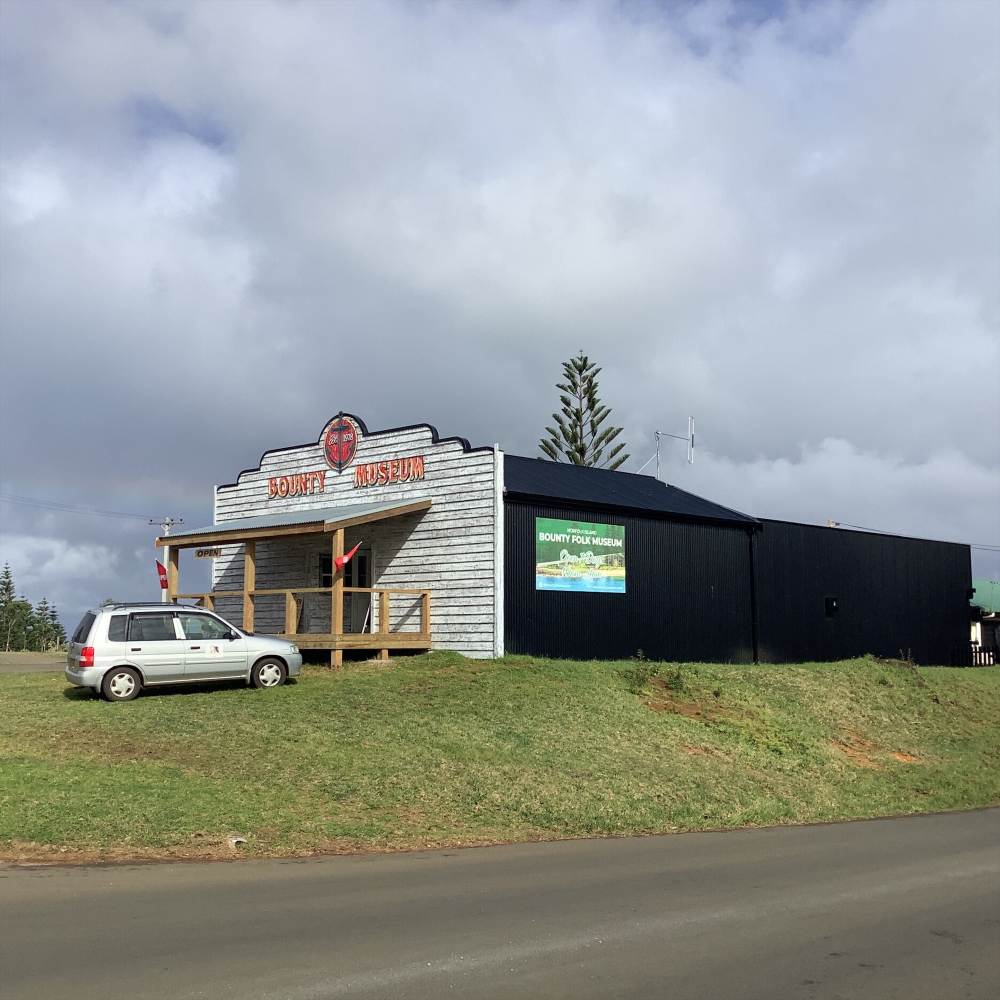
The Bounty Folk Museum serves as the cultural heart of Norfolk Island, a place where history is felt through the tactile weight of its artefacts rather than viewed from behind a velvet rope. Housed in one of the island’s oldest standing structures – a building dating back to 1916 on the corner of Queen Elizabeth Avenue and Middlegate Road – the museum has functioned as a civic anchor for over 45 years. Unlike the curated minimalism of modern galleries, this “treasure chest” is defined by its dense, intimate, and somewhat quirky atmosphere. It is the kind of archive where the creak of the original timber floorboards and the scent of aged paper immediately pull the visitor into a narrative that spans three distinct settlements, from the brutal convict eras to the arrival of the Pitcairn descendants.
Beyond Hollywood: The Real Captain Bligh
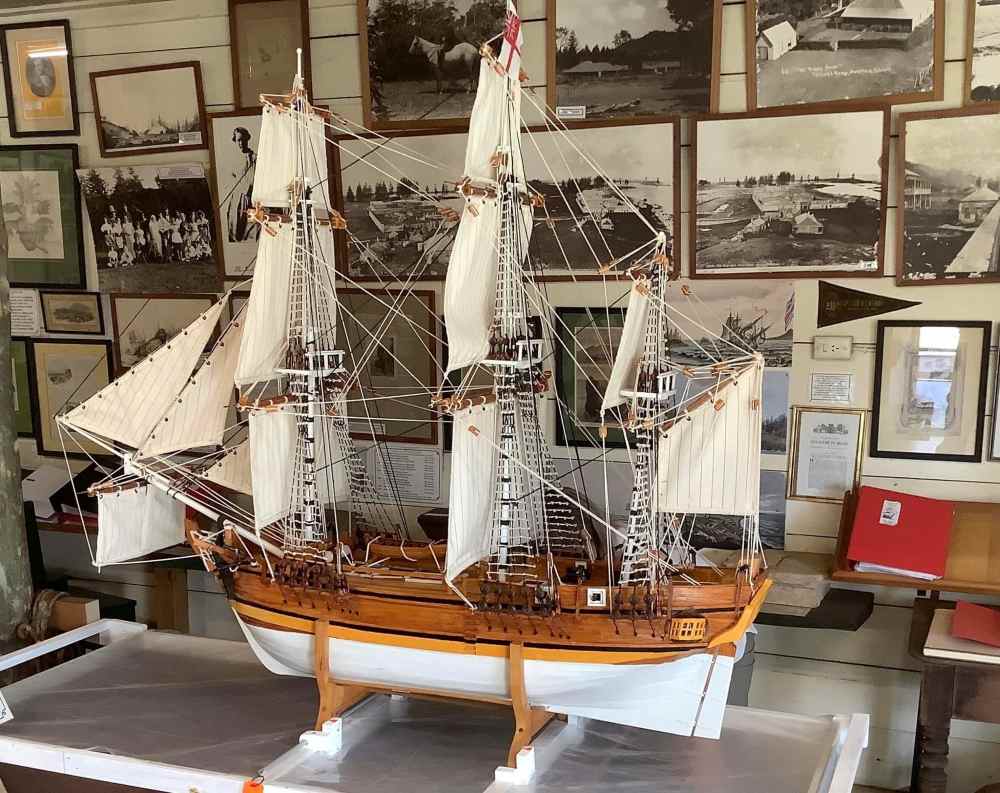
Central to the museum’s current appeal is the “Captain Bligh: Myth, Man and Mutiny” exhibition, a world-class installation directly from the National Maritime Museum in the UK. This exhibit serves as a professional counter-narrative to the cinematic portrayals of Captain William Bligh as a mere tyrant. At its centre is a full-scale, meticulously built replica of the 23-foot Bounty Launch, the open boat in which Bligh and 18 loyalists were cast adrift in 1789. Standing beside the vessel provides a visceral understanding of the scale of his achievement – navigating over 3,600 nautical miles of open sea to Timor with nothing but a quadrant and a pocket watch. It is a study in extraordinary leadership and survival that challenges Hollywood myths with historical fact.
The Domestic Archive: Rooms of Rarity
Moving through the museum is less like a formal gallery visit and more like a guided exploration of a private attic. The collection spans a vast range of social history, with rooms dedicated to the eclectic tools of survival and daily life from the island’s three settlements. One of the most striking aspects of this archive is its lack of “hushed halls”; instead, it provides a hands-on experience that grounds the abstract concepts of colonial history. Visitors can engage directly with the physical reality of the penal eras, including the opportunity to lift a genuine 32-lb ball and chain – a stark, heavy reminder of the physical restraint once used on the island’s prisoners.
Beyond these convict relics, the collection shifts toward the “frankly terrifying” medical and dental instruments of the 19th century. These rusted saws and diagnostic tools offer a clinical perspective on the fragility of life in an isolated colony, where the lack of modern anaesthesia turned surgery into a test of endurance. This sensory immersion is balanced by walls of archival photographs and handwritten research books, which allow for a more contemplative study of Norfolk’s development. The tactile nature of the museum – the ability to touch, lift, and examine these items – ensures that the rarity of the collection is not just seen, but physically understood.
The Pitcairn Connection: A Living Culture
The museum serves as the definitive guardian of the Pitcairn identity, documenting the transition of the mutineers’ descendants from their isolated home on Pitcairn Island to Norfolk in 1856. This is where the maritime legend meets human reality. The collection includes deeply personal heirlooms – family Bibles, woven artefacts, and maritime tools – that serve as the foundation of the island’s current cultural fabric. It is here that one can trace the linguistic and social evolution of the “Norf’k” language, which remains a living testament to the union of British sailors and Tahitian women.
Central to this section is the documentation of the island’s genealogical links. The research books housed within these rooms are often used by visitors to trace their own family lineages back to the 1789 mutiny. By preserving these records alongside the physical objects of the 1856 arrival, the museum ensures that the Pitcairn heritage is presented not as a finished chapter of history, but as an active, ongoing social narrative. It highlights how a disparate group of individuals created a resilient community that has successfully maintained its unique identity into the 2026 era.
Visitor Logistics: The Multi-Entry Pass
The current $15 per person entry fee includes a multi-visit pass, an essential feature given that the ‘Aladdin’s Cave’ layout is often too detailed to absorb in a single hour. This allows visitors to return throughout their stay, perhaps focusing on the maritime exhibits in the morning and returning another afternoon to pore over the genealogical records or the extensive media room, which provides a visual summary of the naval and colonial shifts that shaped the island.
The museum is conveniently located on the roundabout at the corner of Queen Elizabeth Avenue and Middlegate Road, directly opposite the school. Open seven days a week from 10:00 am to 4:00 pm, it fits seamlessly into a day of exploring the Burnt Pine area. For the 2026 traveller, the inclusion of free Wi-Fi on-site also facilitates immediate research for those who find a familiar name in the archival records, allowing for a digital bridge between the museum’s physical holdings and global heritage databases.
The Bounty Folk Museum: Design Your Norfolk Holiday With Us
By preserving the tactile relics of the convict era alongside the living traditions of the Pitcairn descendants, the museum offers a grounded perspective on Norfolk Island. It is an essential stop for anyone wishing to move beyond the scenic clifftops and understand the pulse of this unique South Pacific society.
Are you ready to explore the deeper layers of Norfolk’s history? Our travel specialists design all Norfolk Island packages in-house, ensuring your 2026 itinerary includes unlimited access to the Bounty Folk Museum and its archival treasures. Talk to us today to begin planning your bespoke heritage stay – call us on 1300 991 751!
More Travel Blog Articles
A Walkers and Gardeners' Guide to Norfolk Island’s Best Trails
Norfolk Island is often experienced as a tiny microcosm of living history – where atypical…


Snorkelling and Swimming in Norfolk Island’s Crystal-Clear Lagoons
Norfolk Island’s coastal experience can be coloured by a distinct lack of commercial, ‘buy now,…